
Anyone serious about hiking on La Palma will quickly discover that this island offers more variety of trails in a small area than places ten times its size. Volcanic craters, moss-covered cloud forests, steep cliffs overlooking the Atlantic, and pine-scented ridges above the cloud line. All of it is accessible on foot, and most of it is completely deserted.
Why La Palma Stands Out from Other Hiking Islands
The Canary Islands are popular with hikers, but La Palma stands out. The island rises steeply from sea level to over 2,400 meters, creating vertical climate zones that dramatically change the landscape, sometimes within a single hike.
You can start your day in the subtropical plantations along the coast and end it in the afternoon on a volcanic ridge, surrounded by nothing but rock, sky, and silence.
What makes hiking on La Palma particularly rewarding is the infrastructure. Trails are well marked according to the Spanish GR, PR, and SL systems.
Waypoints are clearly marked, and the trails are maintained by local teams. For a more comprehensive look at the island’s geography, the “ Canary Island: La Palma ” page offers useful background information on La Palma’s place in the archipelago.
The Caldera de Taburiente: La Palma’s Classic Hike
No discussion of hiking on La Palma is complete without mentioning the Caldera de Taburiente. This massive erosion crater, about nine kilometers in diameter, is the heart of the national park. The walls drop nearly 2,000 meters from the rim to the valley floor, and the interior is a world of waterfalls, rock pools, and volcanic colors.
The most popular route leads from Los Brecitos down to Playa de Taburiente, a clearing in a riverbed deep inside the crater. The trail winds through a pine forest, crosses dry stream beds, and passes rock formations colored red and orange by iron deposits. The air smells of pine resin and warm stone.
This is no leisurely stroll. The descent takes about three hours, and the return trip via the Barranco de las Angustias adds another two to three hours. Sturdy shoes, water, and sunscreen are essential. But for anyone who loves hiking on La Palma for its rugged landscape rather than its gentle scenery, the Caldera delivers.
Cloud Forest Trails in the Northeast
The laurel forests of Los Tilos are among the oldest in Europe. They are remnants of subtropical forests that covered large parts of the Mediterranean region millions of years ago.
On La Palma, they survive because the trade winds push moisture against the northeastern slopes, creating a permanent green belt of dripping trees, giant ferns, and moss-covered branches.
Hiking through a laurel forest feels like stepping into another era. The light is filtered through green foliage. Water drips from every surface. The trails wind past wild herbs and fern-covered ravines, where the air is cool and heavy with moisture. The Cubo de la Galga is one of the most accessible routes in this area.
For hikers based in the northwest, the drive to Los Tilos takes about 60–90 minutes. The contrast between the dry, sunny highlands and the humid laurel forest is one of the most striking transitions for anyone hiking on La Palma. The “Mountain Air and Microclimate” page explains the microclimatic conditions that give rise to these zones.
Volcanic Ridge Hikes Above the Clouds
The backbone of La Palma runs from north to south along the Cumbre. Hiking along this ridge is one of the most dramatic experiences you can have while hiking on La Palma. On clear days, both coasts are visible at the same time. The Atlantic stretches out in every direction, and neighboring islands appear on the horizon like distant ships.
The GR 131 long-distance hiking trail follows most of this ridge. Some sections can be hiked in a single day, especially the stretch near the Roque de los Muchachos Observatory. The terrain here lies at an elevation of over 2,000 meters; it is volcanic and barren, with views that seem more like something from another planet.
The southern section near the Volcán de San Antonio and the Tajogaite eruption zone offers a different kind of volcanic landscape for hikers on La Palma. Here, the ground is still raw. The lava flows are so young that nothing grows on them yet. It is barren, quiet, and completely different from the green north.
Trails Starting from the Northwest Highlands
For hikers staying at high-altitude lodgings in the Garafía area, several trails begin right at the highland accommodations. The pine forests in the northwest are crisscrossed by trails ranging from gentle morning walks to full-day descents to the coast.
Hiking on La Palma from a base in the highlands means stepping outside and finding yourself right on a trail, without having to drive anywhere.
A popular option follows forest trails through ancient Canary Island pines, which grow at unusual angles, shaped by decades of trade winds. The ground is soft with pine needles, and the scent fills the air. These hikes aren’t technically challenging, but they offer complete solitude.
Coastal descent routes lead down from the highlands through barrancos—the deep gorges carved out by water over thousands of years.
These trails are steeper and more challenging, but they reward hikers with hidden swimming spots and dramatic cliffscapes. To help you plan your route and understand the elevation zones, the La Palma Map page shows the complete layout with marked trails.
Practical Tips for Hiking on La Palma
Footwear is more important than most people realize. The volcanic rock is rough and uneven. Sturdy hiking boots with ankle support and good traction aren’t just an option—they’re a must—when hiking on La Palma.
Water is essential. High-altitude trails above the cloud line are exposed to direct sunlight, and the dry air at high altitudes causes the body to lose water more quickly than at sea level. Be sure to bring at least two liters per person for every hike lasting more than two hours.
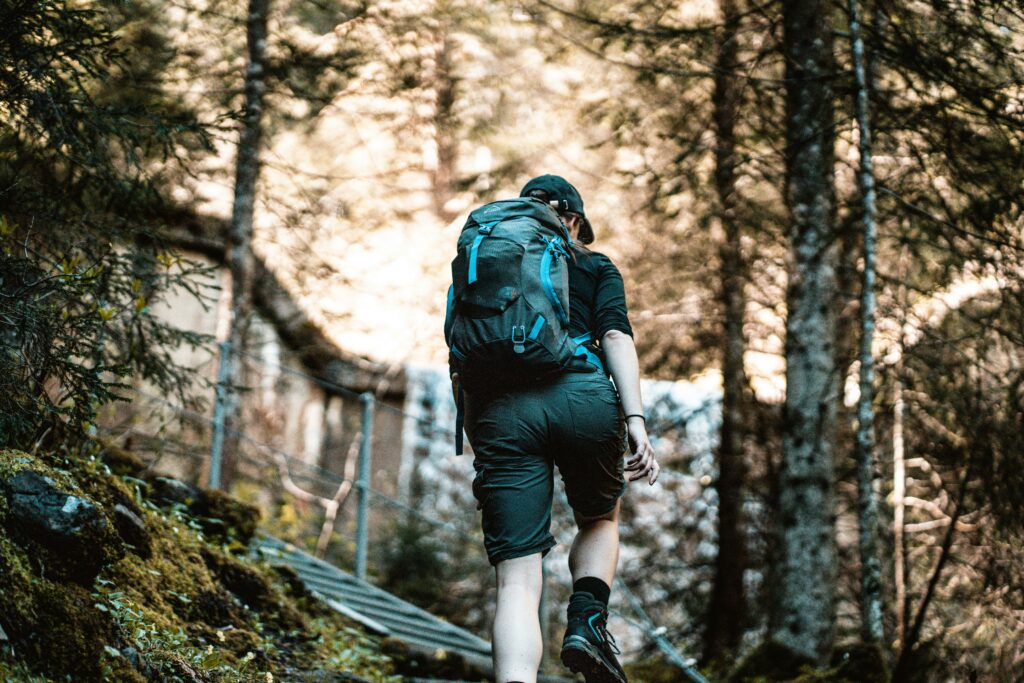
The weather changes quickly with altitude. A sunny terrace at 1,380 meters can turn into clouds and a cool breeze within thirty minutes as you descend. Layering is the key—a lightweight fleece and a windproof jacket will fit in any daypack.
The best months are generally October through June. Summer isn’t out of the question, but the midday heat at lower elevations makes afternoon hikes unpleasant. Early mornings are always the best time to start.
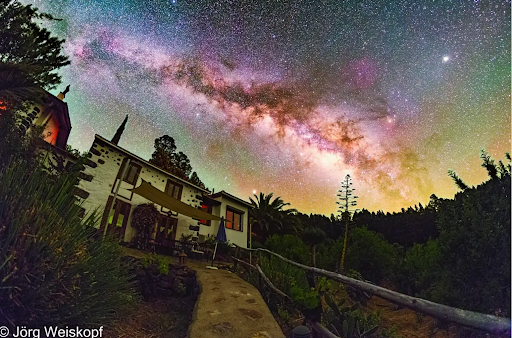
After a day on the trails, the reward at this altitude is a clear night sky. The Astronomy La Palma website explains why the northwestern highlands offer exceptional stargazing. At hacienda-lapalma.com, the accommodations are located at 1,380 meters and feature high-speed internet so you can share your hiking photos and plan your next route.

Frequently Asked Questions (FAQs)
1. How difficult is hiking on La Palma for beginners?
La Palma offers trails for every skill level. Forest hikes in the northwest and the Cubo de la Galga laurel forest trail are gentle and well-marked. The descent into the caldera and ridge hikes require more fitness and experience. Starting with shorter high-altitude trails and working your way up is the best approach.
2. Do You Need a Guide to Hike on La Palma?
Not for most routes. The trail network is well marked with official signage, which makes hiking on La Palma straightforward for independent hikers. Guided hikes, however, provide local knowledge about geology, plants, and history. A guide is recommended for remote barranco descents if you are unfamiliar with the terrain.
3. When is the best time of day for a hike on La Palma?
Early in the morning, ideally before nine. The light is softer, the temperatures are lower, and clouds haven’t yet built up on the eastern slopes. Starting early also means you’ll be finished before the midday heat sets in. Hiking on La Palma in the early morning hours also offers the best chance of clear views from the summit.
4. Can you go hiking on La Palma all year round?
Yes. The island’s mild climate makes hiking on La Palma possible in any season. Fall through spring offers the most pleasant temperatures. Summer hikes are best enjoyed in the shady laurel forests. A particularly beautiful highlight is the laurel forest around La Zarza and Don Pedro. The trailhead is a 20-minute walk from Hacienda La Palma. It rains occasionally in winter, but it rarely lasts longer than a day.
5. Are there any trails that start directly from highland lodgings?
Yes. Accommodations in the northwestern highlands—especially around Garafía at 1,380 meters—have trails that start right from the property. Forest hikes, vineyard trails, and barranco descents are all accessible without having to drive. This makes hiking on La Palma from a highland base particularly convenient.