
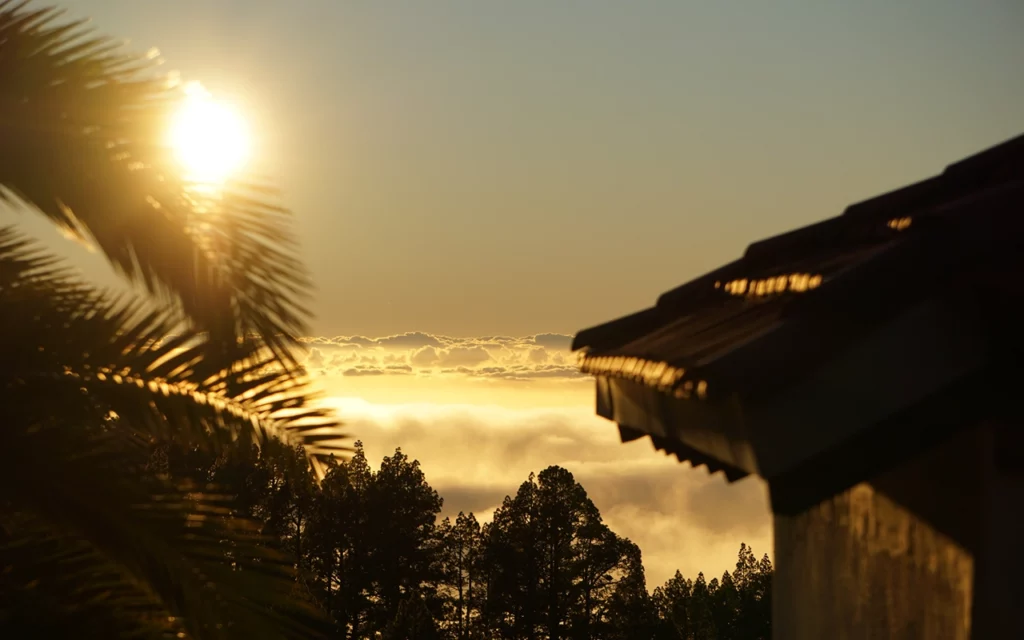
La Palma’s weather is one of those things that surprises almost everyone who visits the island for the first time. You check a forecast for the capital on the east coast, pack accordingly and then head to the northwest, only to find a completely different climate there.
Clouds lie in a belt below the ridge. The air is cooler, drier and clearer. And if you spend the night above 1,000 meters, you will find that the La Palma weather in the morning forecast has little to do with what you actually experience.
Why the Northwest has its own climate
La Palma is a volcanic island that rises steeply out of the Atlantic. Its highest point, the Roque de los Muchachos, is over 2,400 meters. This altitude on such a small land mass creates dramatic climatic zones that are stacked on top of each other. The coast can be humid and warm, while the highlands are cool, dry and bathed in direct sunlight above the clouds.
The northwest, especially around Garafía, is in a favorable position. Trade winds push moisture from the northeast and form a cloud layer that typically settles between 600 and 1,500 meters on the windward side. But the northwest is partially protected.
At 1,380 meters on a southwest-facing slope, a location like the Hacienda La Palma winery is often just above the cloud line. This means that La Palma weather here can show clouds in the morning, which dissipate by mid-morning and leave clear sunshine, while lower altitudes remain overcast.
For a broader view of the island’s geography and how elevation shapes the landscape, the “ Canary Island: La Palma ” page provides a good overview of La Palma’s unique position within the archipelago.
What the layer of stratus clouds means for your stay
Understanding La Palma weather at altitude starts with the trade wind inversion. This is a natural phenomenon in which warm air lies over cooler, more humid air and creates a stable layer of clouds. Below this, the climate tends to be humid and overcast. Above it, the sky is usually clear and the air is noticeably drier.
At 1,380 meters on the northwest slope, you’re right at the upper boundary of this inversion layer. On most days, the clouds form a blanket above you. The sun rises earlier and stays out longer than in the valleys.
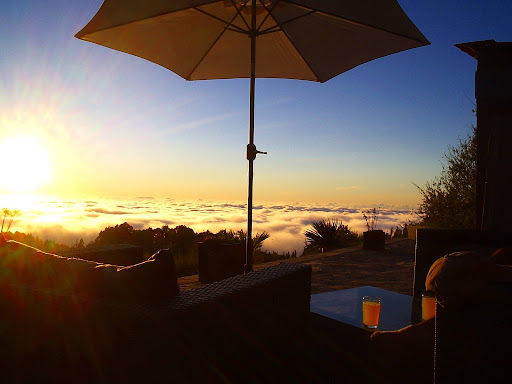
Humidity is lower, which makes warm days pleasant and cool evenings fresh instead of damp. The UV intensity at this altitude is also significantly higher than at sea level, even if the temperatures seem mild.
The practical result is that the La Palma weather in the highlands often offers more usable hours of sunshine than the coast, especially in the cooler months.
Seasonal patterns at 1,380 meters
The weather on La Palma changes with the seasons, albeit less dramatically than on the European mainland. There is no real winter in the classic sense, but there are noticeable differences.
From late spring to early fall, the highlands are warm during the day and pleasantly cool at night. Daytime temperatures at 1,380 meters range between 16 and 26 degrees on sunny days.
At night, they drop to around 14 to 18 degrees. Rain is rare. The trade wind clouds tend to be thinner and the pool on the property reaches a water temperature of around 20-24 degrees thanks to solar heating.
In the cooler months, daytime temperatures are around 14 to 20 degrees, and at night it can drop to 6 or 10 degrees. This is when the wood-burning stoves in the vacation homes really come into their own. Rain comes occasionally, usually as short, intense showers rather than continuous rain.
Between showers, the air is remarkably clear and the sunsets after rain at this altitude are some of the most vivid you will ever see. La Palma weather after rain in the highlands is often at its most spectacular.
What often surprises visitors is the Calima. This is a weather event in which hot, dry air from the Sahara blows over the Canary Islands, sometimes with fine sand. Temperatures rise noticeably and the sky takes on a hazy, golden hue. Calima events are short and usually only last a few days.
How altitude affects everyday life and planning
Life at 1,380 meters shapes the daily rhythm in a way that most visitors do not expect. The mornings start cool. The thick stone walls of traditional Canarian houses maintain the night temperature, so it feels really fresh when you step outside. In the morning, the sun warms the terraces and the day opens up.
For hikers, the La Palma weather at high altitude creates an ideal time window. The best time to start a tour from the northwest is usually early to mid-morning, before the afternoon heat sets in on exposed ridges.
The “ Hiking on La Palma ” page lists routes that start in the northwest and wind through pine forests and along volcanic ridges.
The evenings cool down faster than on the coast. A sweater is useful for sitting on the terrace after sunset, even in summer. But this cooling makes it easier to sleep.
Guests often mention the combination of altitude, clean air, and the drop in temperature at night. Using the map of La Palma, you can explore different altitude zones and plan day trips that take you through various climate zones in a single day.
What you should pack for the Northwest Highlands
The La Palma weather at 1,380 meters calls for layered clothing rather than a specific wardrobe. During the day, a T-shirt and light trousers work on the terrace.
Breathable layers are ideal for hiking, as you can start in cloud and step into direct sunshine within thirty minutes. A light rain jacket is worthwhile from fall to spring.
A fleece or warm sweater is essential in the evening. The temperature difference between the midday sun and the terrace after sunset can be 10 to 12 degrees. Good walking shoes are important, not only for hiking, but also for navigating vineyard paths and stone terraces.
Sunglasses and sun protection with a high factor are more important at altitude than most people expect. The air is cleaner, UV filtered less, and even on partly cloudy days you burn faster up here than on the beach below.
For practical questions about getting here and what to bring, the FAQ page on hacienda-lapalma.com covers everything from flight connections to recommended vehicles.
The connection to the night sky
Clear La Palma weather at high altitude is not just about sunshine. It’s also about what happens after dark. La Palma is home to some of the most important astronomical observatories in the world, and the northwest has exceptionally low light pollution.
When the sky clears after sunset at 1,380 meters, it opens up in a way that doesn’t happen at lower altitudes.
The La Palma weather on clear highland nights means stable air, low humidity and almost perfect transparency. The Milky Way is visible to the naked eye. Even without a telescope, the night sky from the northwest is one of the most impressive parts of any visit.
The Astronomy La Palma page explains the science and gives practical tips on observation.

Frequently Asked Questions (FAQs)
1. is the La Palma weather the same all over the island?
Not at all. La Palma’s weather varies across several microclimates due to the steep volcanic terrain. The east coast tends to be wetter and cloudier, while the west and northwest often enjoy clear skies above the trade wind cloud layer at higher altitudes. Driving from one side to the other can feel like changing countries.
2. how many days of sunshine can you expect in the Northwest Highlands?
The northwest above 1,000 meters benefits from over 300 days of sunshine per year. This does not mean that it never rains, but precipitation is usually concentrated in short showers in the cooler months. Most days offer several hours of clear, direct sunshine, even in winter.
3. does it get cold at 1,380 meters on La Palma?
That depends on the definition of cold. La Palma weather at this altitude means that daytime temperatures rarely fall below 14 degrees, even in the coolest months. At night, it can drop to 6 or 9 degrees between late fall and spring.
Traditional stone houses with fireplaces are well equipped for this. Most visitors find the cool nights refreshing rather than unpleasant.
4. which time of year is the best for good La Palma weather in the northwest?
Every season has something to offer. Late spring to early fall brings the warmest and driest conditions. The cooler months offer softer light, emptier hiking trails and dramatic cloud formations. La Palma weather in the highlands is favorable all year round compared to mainland Europe.
5. how does La Palma weather affect hiking conditions in the northwest?
La Palma’s weather and high altitude microclimate create almost ideal hiking conditions for most of the year. Mornings are cool enough for exertion and the air is dry enough for comfort.
Rain is possible in the cooler months, but is usually short-lived. Paths dry quickly on the volcanic soil, and visibility after rain is often the clearest you’ll find anywhere.