
The story of the La Palma volcano is not about a single mountain, but about an entire island created by fire.
La Palma is one of the youngest of the Canary Islands, and its dramatic ridges, black-sand coves, and pine-covered slopes all trace their origins to eruptions that have occurred over hundreds of thousands of years.
For visitors, this means: The volcanic landscape isn’t a museum piece to be viewed from a distance. It’s the ground you walk on, the view from the ridge, and—since 2021—a piece of very recent history that’s still steaming.
A Young Island, Entirely Shaped by Fire
To understand the landscape of the La Palma volcano, it helps to imagine the island divided into two halves. The northern half is older and eroded, crowned by the vast Caldera de Taburiente, a collapsed crater about eight kilometers in diameter that today forms a national park.
This part of the island is considered geologically extinct, its slopes smoothed by time, forest, and deep gorges.
The southern half is the opposite: young, rugged, and still active. This is the Cumbre Vieja ridge, a north-south backbone dotted with dozens of cinder cones and craters.
Almost every eruption in the island’s recorded history has occurred here, and the rock beneath your feet in the south is often only decades or centuries old. Anyone standing on the ridge is literally standing on the youngest land in Spain.
The 2021 Tajogaite Eruption
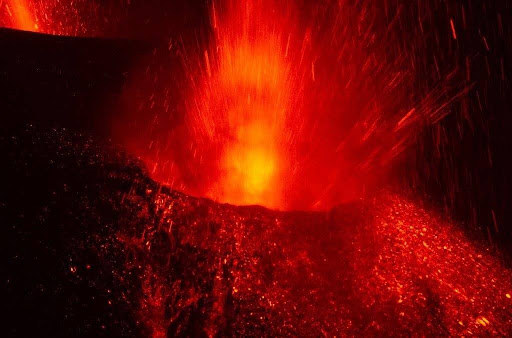
The most significant recent chapter in the history of the La Palma volcano began on September 19, 2021, when a new fissure opened on the Cumbre Vieja ridge. The eruption lasted 85 days and ended on the 13th.
December, making it the longest in the island’s recorded history. The new cone was later named Tajogaite, from a word in the Benahoarita language of the island’s first inhabitants that roughly means “split mountain,” a reference to how the ground split open during the eruption.
The human toll was high. Lava buried about 1,200 hectares of land and destroyed some 3,000 buildings, including much of the village of Todoque, and created a new peninsula where the molten rock met the sea.
The Smithsonian Institution’s Global Volcanism Program documents this as part of the island’s long history of eruptions, which dates back thousands of years. Today, the site serves as both a memorial and a source of fascination, with viewing points located at a safe distance around the lava field.
Volcano Hikes That Are Well Worth the Effort
For hikers, the terrain around the La Palma volcano offers some of the most impressive trails in Europe. The routes vary greatly, so there’s something for everyone—from casual walkers to serious trekkers.
The classic route is the Ruta de los Volcanes, a challenging ridge hike of about 24 kilometers that winds its way through the volcanic cones of Cumbre Vieja, with the Atlantic Ocean on both sides. Those who hike all the way to the village of Fuencaliente will enjoy a stop at the legendary Bar La Parada, where they can savor delicious almond cookies and Malvasia wine.
For a gentler hike, the trails around the older craters in the south—such as San Antonio and Teneguía near Fuencaliente—are ideal; they’re shorter and reward hikers with views of red-and-black volcanic slopes and the coastline.
In the north, the trail leads into the Caldera de Taburiente, into the eroded heart of an ancient volcano rather than a young one—a completely different experience from the young cones of the south.
Whatever you choose: Be sure to bring layers. The volcanic highlands are cool and exposed, and the weather can change quickly at higher elevations.
Where to See the Volcanic Landscape
Not everyone wants to go on a full-day tour, and the good news is: Some of the best views of the La Palma volcano require little more than a short walk from the parking lot. The island is generously dotted with scenic overlooks.
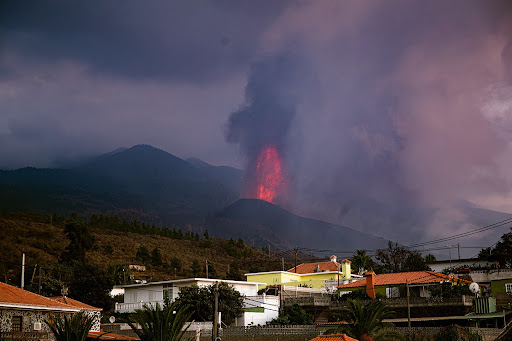
The Tajogaite lava field can be seen from several marked miradores around the Aridane Valley, where the sheer scale of the 2021 lava flows becomes apparent.
Further south, the Fuencaliente area features volcanic cones alongside cultivated vineyards and salt flats by the sea—a reminder that the island’s fertile wine-growing region springs directly from this volcanic soil, as described on the “Above the Clouds” page.
And on clear days, from the northwestern highlands, you can see the entire southern ridge—a reminder of how close the island’s active geology is to its tranquil corners.
Guests staying in this quieter part of the island regularly highlight the tranquility and the night sky in their reviews, and such a peaceful location serves as a great base for day trips to the more dramatic volcanic south.
Respecting an Active Landscape
Visiting the volcanic regions of La Palma comes with a sense of responsibility. Parts of the 2021 lava field remain off-limits because the ground is unstable and gas emissions—particularly carbon dioxide—can still be dangerous in enclosed depressions.
Researchers examined precisely these dangers, as described in the University of Cambridge’s “Scientists investigate volcanic pollution during the 2021 Tajogaite eruption.” Always follow local signs and barriers.
More broadly, the volcanic soils and sparse alpine vegetation recover only slowly, so staying on marked trails is even more important here than in many other landscapes.
This is another reason why the island remains so unspoiled: both locals and visitors treat the terrain with care. When treated with respect, the volcanic landscape rewards you with scenery you won’t find anywhere else in Europe.

Frequently Asked Questions (FAQs)
1. Is it safe to visit La Palma after the 2021 volcanic eruption?
Yes. The eruption ended in December 2021, and the island is safe for visitors. Most areas are fully open, although parts of the Tajogaite lava field remain closed due to unstable ground and residual gases. As long as you follow local guidelines, you’ll be completely safe.
2. Can you walk on the 2021 lava field?
Only in designated areas. Official overlooks around the Aridane Valley let you see the lava field and the new cone up close, but walking directly on large sections of the flow is restricted for safety reasons. Where access is permitted, guided tours are sometimes available. You can find some of these options at this link:
3. What is the best volcano hike on La Palma?
The Ruta de los Volcanes is the best known—a roughly 24-kilometer ridge hike across the cones of Cumbre Vieja. For shorter options, the trails around San Antonio and Teneguía in the south near Fuencaliente are more accessible yet still offer dramatic volcanic scenery.
4. Where is the volcano on La Palma?
The active volcanic zone is the Cumbre Vieja ridge in the south, where the Tajogaite cone formed in 2021. The older, extinct Caldera de Taburiente dominates the north. The two halves offer very different volcanic landscapes to explore.
5. Do you need a guide to see the volcanoes?
Not for the marked overlooks and most of the signposted trails. You can visit these on your own. A guide is helpful for understanding the geology or accessing restricted areas, but casual visitors can easily experience the main volcanic attractions on their own with a little preparation.